
Most mini splits do both AC and heat, according to Filterbuy’s seller guide, but cooling-only models exist, so confirm that the exact model is a heat pump before you buy. DOE says mini split heat pumps can run in reverse to heat a home in colder months. Gree, a manufacturer, warns that “mini-splits are not all heat pumps.”
Heating also has limits. ENERGY STAR says its cold climate units are tested down to 5°F and keep operating below that, though pairing them with backup heat is most efficient at very low temperatures. A brand’s rating tells you how low a unit is rated to operate, not how much heat it delivers there. A standard mini split also runs one mode at a time.
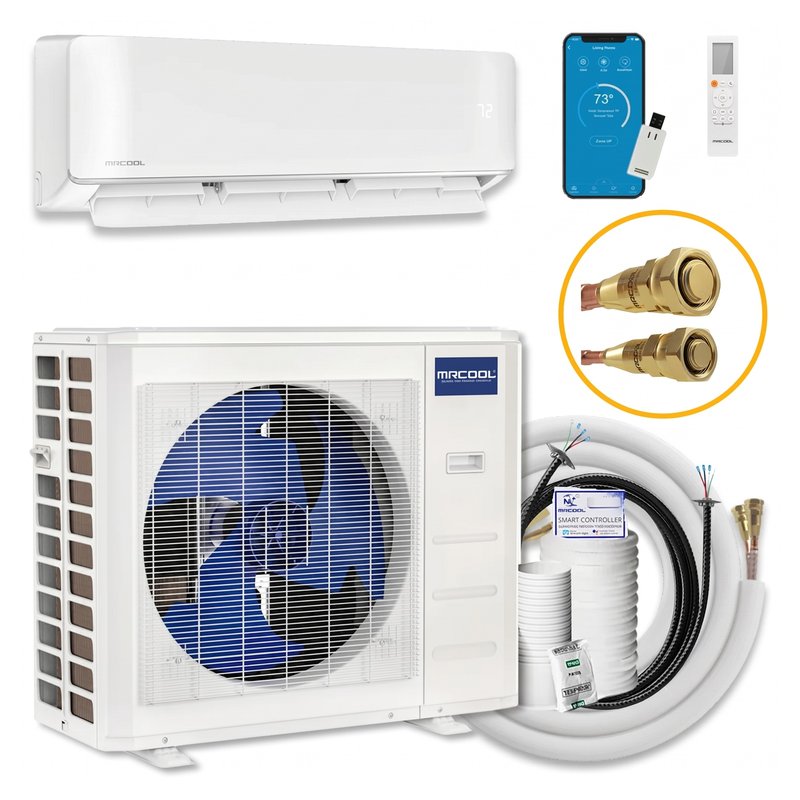

How one unit cools in summer and heats in winter
DOE describes a mini split as an outdoor compressor/condenser and an indoor air-handling unit, linked by a conduit that carries the power cable, refrigerant tubing and condensate drain. Nothing about that layout is seasonal. What changes is the direction heat travels.
ENERGY STAR explains the winter side this way: the outdoor unit pulls heat from outside air, even in cold weather, and refrigerant carries it indoors. In warm months the system reverses and works as an air conditioner.
Because the unit moves heat rather than generating it, ENERGY STAR says ductless heat pumps can use up to 60% less energy than standard electric radiators. That is an agency figure against one specific type of heat, and your own result depends on your climate, your rates and the system you are replacing.
What the sources say about heating
- DOE: mini split heat pumps can run in reverse, so one unit can serve both seasons.
- Gree: some mini splits only provide cooling; the company says all Gree mini splits are heat pumps.
- HVACDirect: lists the Mitsubishi MSY-GL18NA / MUY-GL18NA as a single-zone cooling-only system.
- Filterbuy: a seller’s guide says most mini splits are heat pumps. We found no government share figure.
How to tell a heat pump from a cooling-only model
A listing headline won’t always settle it. Three checks on the spec sheet do more.
- Look for “heat pump” in the model description. Sellers name the other kind too, as HVACDirect does with “cooling-only system” on that Mitsubishi listing.
- Look for a heating BTU figure beside the cooling figure. A model that lists only cooling capacity deserves a question before you order.
- Look for an HSPF2 rating. DOE’s national minimums give split heat pumps a heating floor of 7.5 HSPF2, while split air conditioners have a SEER2 floor only. Our reading: a published HSPF2 points to a heat pump, but the model description should confirm it.
Here is how that looks across five of the 12,000 BTU systems we cover. Every figure below is the brand’s own.
| Model | Cooling (BTU) | Heating (BTU) | Rated to operate down to |
|---|---|---|---|
| MRCOOL DIY 5th Gen 12K | 12,000 | 12,000 | −13°F |
| Senville LETO 12K | 12,000 | 12,000 | 5°F |
| DELLA Optima 12K | 12,000 | 12,400 | −13°F |
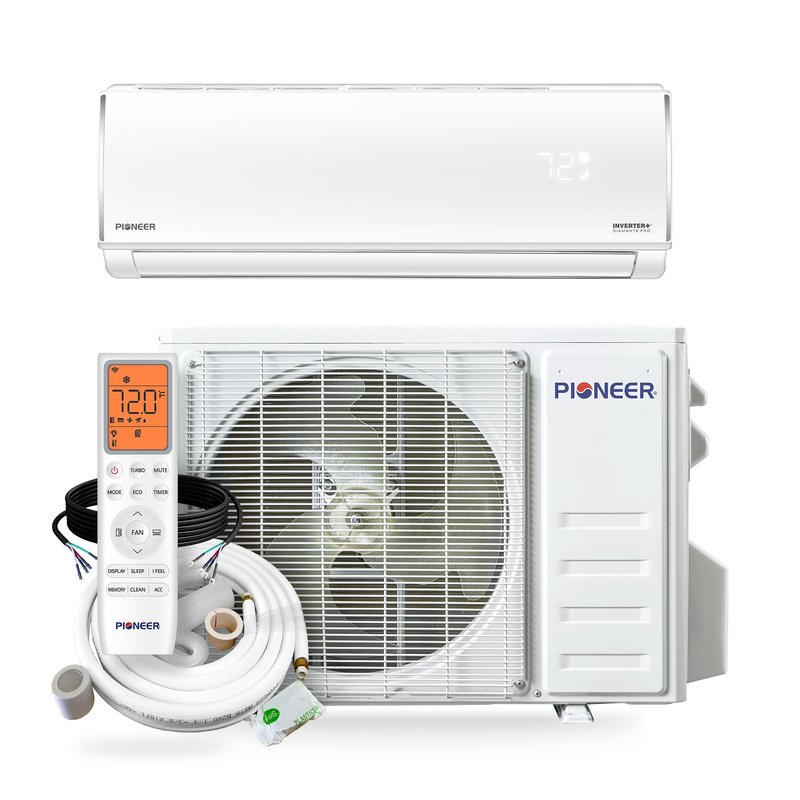
| Pioneer Diamante Pro 12K | 12,000 | 12,000 | −4°F |
| Gree Sapphire 12K | 12,000 | 12,200 at 47°F | −22°F |
All five heat on paper. The last column separates them, and it is a rating to run, not a promise of output at that temperature.
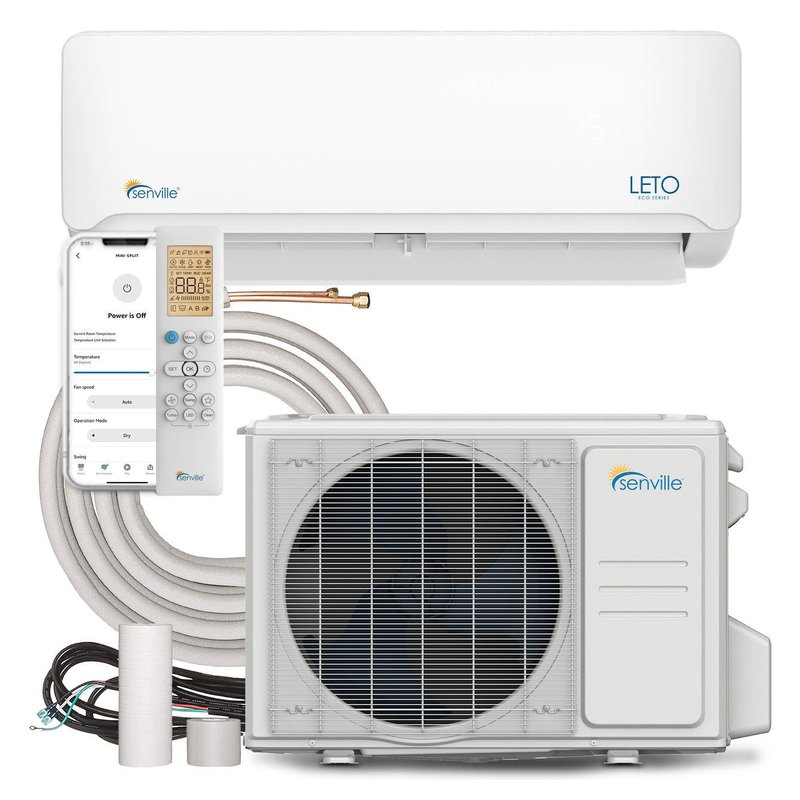
For milder winters · Budget price range
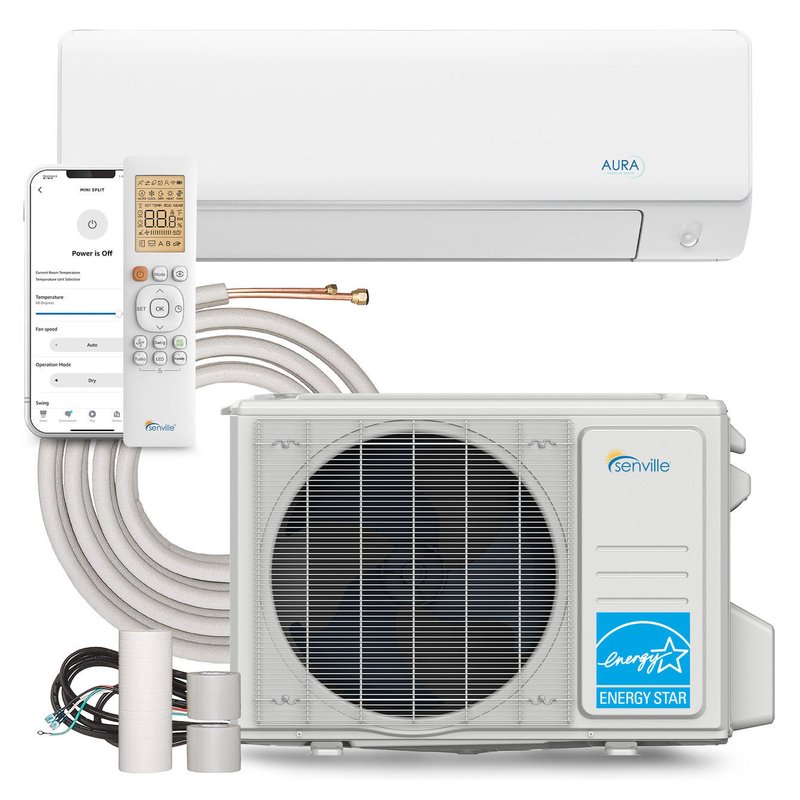
Senville LETO 12K (115V)
Senville lists 12,000 BTU of heating and cooling on 115V, brand-rated to 5°F. Its warranty page says DIY installation will void coverage, so budget for a professional install.
Check BTU options ›What the heating really covers in your climate
How low a mini split keeps working depends on the model. AC Direct, a retailer, says standard heat pumps work down to roughly 20–25°F, with cold-climate models rated to −13°F or −22°F. ENERGY STAR’s cold climate criteria ask for heating capacity at 5°F of at least 70% of capacity at 47°F.
Output changes as the temperature drops, so a rating is only half the answer. Among our picks, only Pioneer Diamante Pro and Gree Sapphire have published low-temperature capacity in the documents we read:
- Pioneer Diamante Pro 12K: Pioneer’s submittal lists 10,000 BTU at 17°F and 9,000 BTU at 5°F, with heat rated to −4°F.
- Gree Sapphire 12K: Gree’s submittal lists 12,200 BTU at 5°F, and its extended table lists 9,758 BTU at −22°F with 70°F return air. The two documents disagree at 17°F: 10,300 BTU on the submittal, 12,573 BTU on the extended table.
Backup heat is where sources part ways. ENERGY STAR says pairing with backup is most efficient at very low temperatures. In trade press, Fujitsu says backup isn’t required if installation steps are followed, while METUS says a supplemental source may be recommended in extremely cold regions or poorly insulated homes. Follow your maker’s instructions and ask for a load calculation.
If winter is the deciding season, our guide to the best mini split for cold climates compares rated ranges and published capacity side by side.
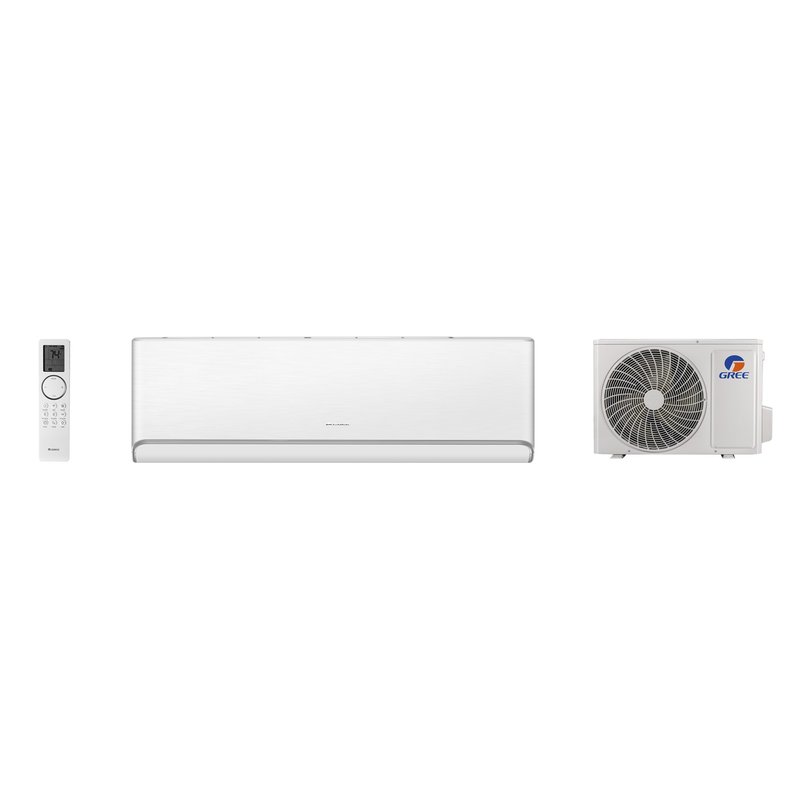
For sizing against winter numbers · Premium price range
Gree Sapphire 12K
Gree publishes capacity down to −22°F for this 28 SEER2 unit, which is what a heat-loss calculation needs. It is a contractor install, and Gree directs warranty service to the installing contractor.
See what’s in the box ›What a mini split won’t do, even if it heats
- Heat one room and cool another at once. Efficiency Maine says mini split heat pumps cannot do this and VRF systems with heat recovery can. ACHR News adds that only heat recovery VRF serves different zones in different modes.
- Stand in for a dehumidifier. Pioneer says dry mode is not a replacement for one. Fujitsu says dry mode helps most on mild, damp days. The two disagree on energy: Fujitsu says it uses less than cooling mode, Pioneer says it uses more than other modes.
- Filter like a high-MERV system. DOE says mini splits generally have lower MERV filters, and a separate air cleaner may be needed for more filtration.
- Bounce back fast from a deep setback. ENERGY STAR says heat pumps don’t save by setback the way furnaces or boilers do, and Efficiency Vermont slides say deep setbacks cause long recovery in the least efficient mode.
Two placement and settings notes follow from the same sources. ENERGY STAR says the outdoor unit releases water when defrosting, so keep it away from doors and windows. It also suggests choosing heat or cool rather than Auto, which avoids mode-switching in mild weather.
Five checks before you buy for both seasons
- Heat pump or cooling-only. Confirm it in the model description, not the headline.
- Winter low against the rating. Compare your coldest typical temperature with the brand’s rating, and with published capacity where it exists.
- Size. ENERGY STAR says equipment that is too large or too small performs poorly, and that a contractor should verify size with a Manual J calculation.
- Warranty terms. Senville says DIY installation voids coverage. MRCOOL says a licensed contractor is not required for its DIY series, but it excludes faulty installation and does not cover labor. Mitsubishi and Fujitsu tie coverage to licensed contractors and exclude internet purchases.
- Who connects the lines. EPA’s Q&A says connecting pre-charged lines on an R-410A mini split requires Section 608 certification. Some sellers say otherwise for quick-connect kits, and we found no EPA statement on R-454B or R-32 kits. Check with EPA and your local code office.
Honest note
Published ratings run ahead of field results. DOE-sponsored work at Brookhaven National Laboratory measured seasonal compressor COP mostly between 1.2 and 2.5 at ductless sites, on units that pre-date DOE’s Cold Climate Challenge, and 24-hour COP came in significantly below steady-state figures. We have not tested or used these mini splits ourselves; specs are the brand’s own.
Questions people ask
Do all mini splits have a heating mode?
No. Gree says mini splits are not all heat pumps and that some only provide cooling, and HVACDirect lists a Mitsubishi 18,000 BTU GL-series system as cooling-only. Check the model description for “heat pump” and look for a heating BTU figure before you buy.
Can a mini split heat one room and cool another?
Not a standard one. Efficiency Maine says mini split heat pumps cannot heat and cool at the same time, and that VRF systems with heat recovery can. On a multi-zone mini split, plan on every indoor unit running in the same mode.
Does a mini split still heat when it’s below freezing?
Many do, depending on the model. AC Direct, a retailer, says standard heat pumps work down to roughly 20–25°F. ENERGY STAR says its cold climate units are tested down to 5°F. Some brands rate lower still, and capacity changes with temperature.
Can a mini split be my only heat source?
It depends on your climate and home, and sources disagree. ENERGY STAR says backup heat is most efficient at very low temperatures. Fujitsu says backup isn’t required if installation steps are followed, and METUS says a supplemental source may be recommended in extremely cold regions. Ask for a load calculation.
Is mini split heat cheaper than electric heat?
It can be, though results vary. ENERGY STAR says heating costs can be cut roughly in half compared with conventional electric heating, and that ductless units can use up to 60% less energy than standard electric radiators. Your climate, rates and the system replaced all change the outcome.
Read first: best mini split ac and heat · best mini split for cold climates
Sources: ENERGY STAR: Ductless heating and cooling · US DOE Energy Saver: ductless overview · Gree: Mini splits vs heat pumps · Efficiency Maine: VRF one-pager · ACHR News: Ductless heat pumps (reprint) · Brookhaven National Laboratory for DOE (2023)
This article is general information, not professional HVAC, electrical or legal advice. Refrigerant work, wiring, permits and warranty terms vary by product and location; check the manual and local rules, and use a licensed contractor where they require one.