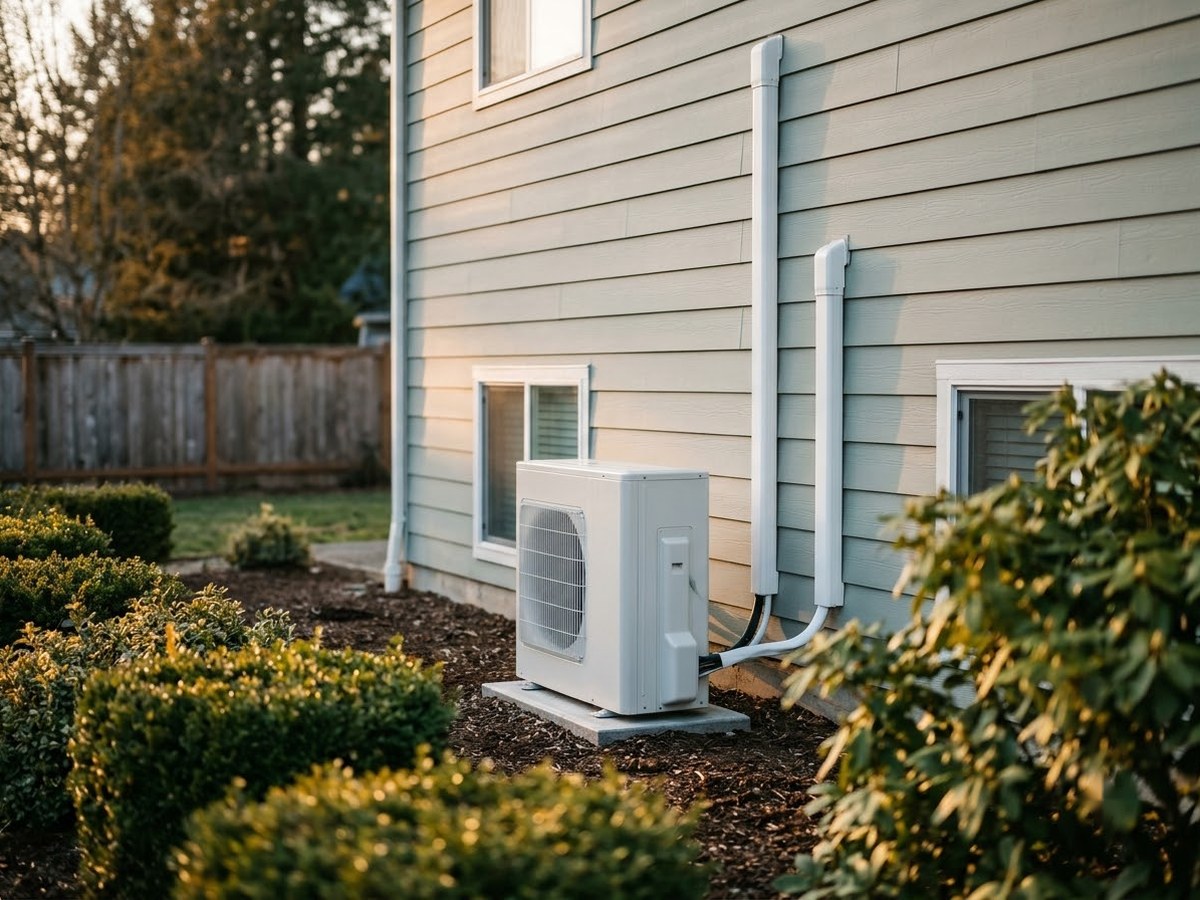
Is a multi-zone mini split better than several single-zone systems?
Not always. A forum expert at GreenBuildingAdvisor argues three single-zones usually beat a three-head multi of the same tonnage if each room’s load is at least two-thirds of rated output, but that a small multi head can beat an oversized single for tiny loads. We found no DOE statement either way.
How many zones can one outdoor unit run?
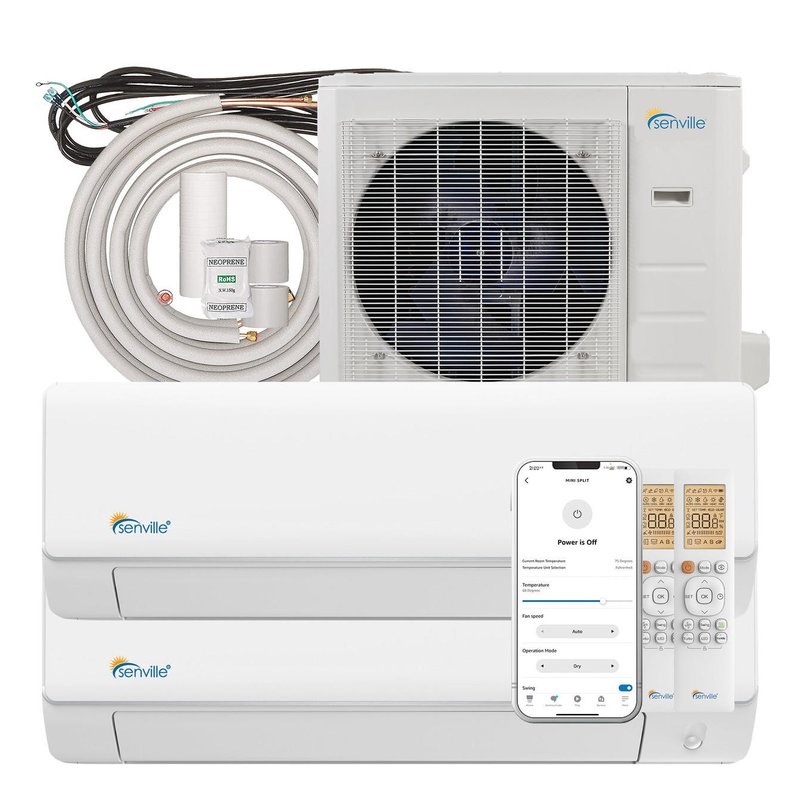
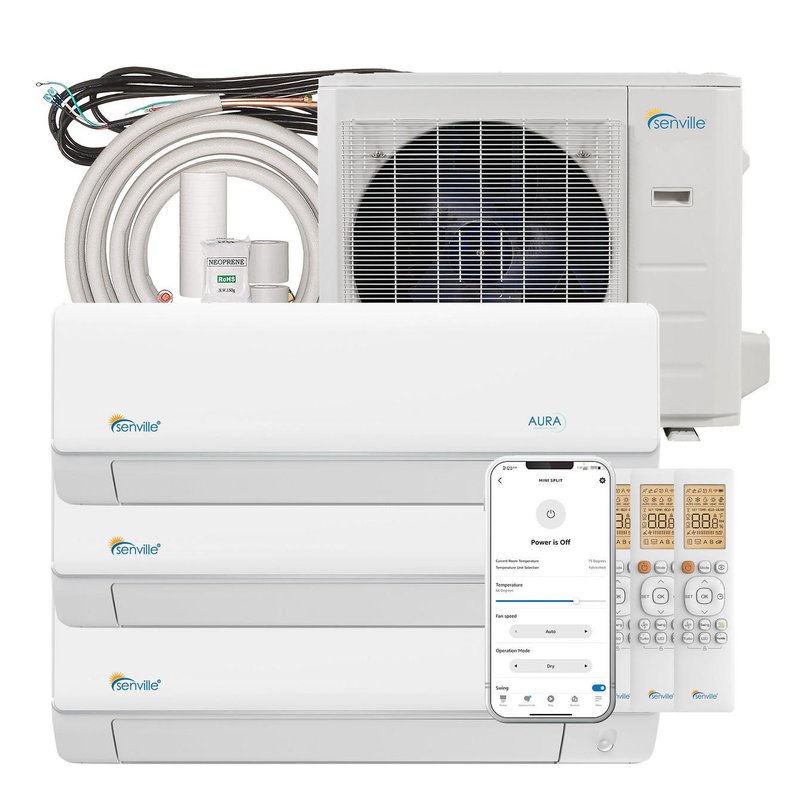
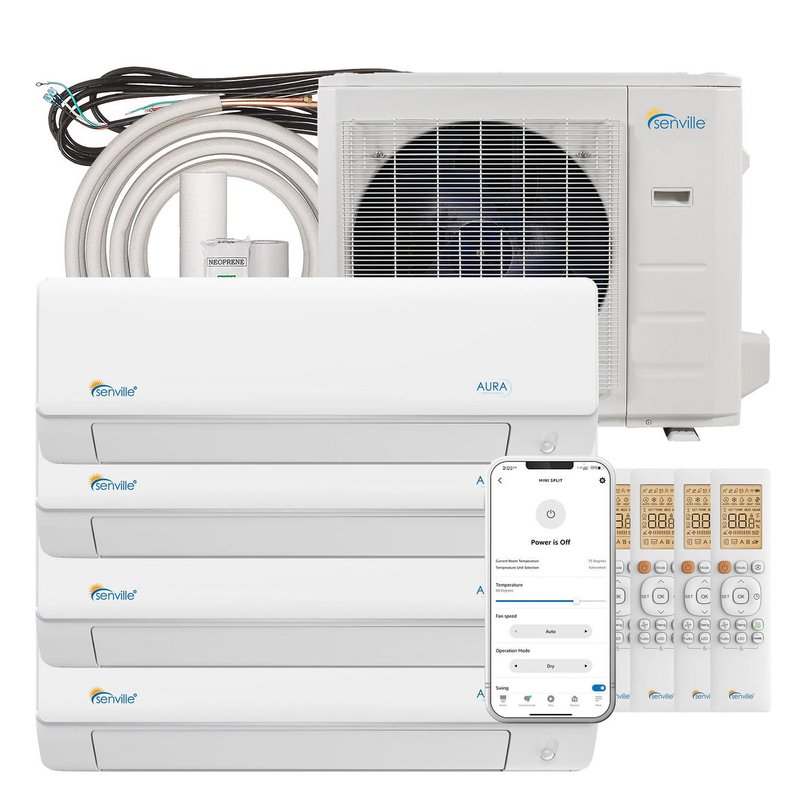
DOE says many models support up to four indoor units per outdoor unit. Efficiency Maine says up to six on a large multi system. Among our picks, the dual-zone unit is listed for 2–3 zones and the 36K units for 3 or 4 heads. Check your exact outdoor model.
Can each room have its own temperature?
Yes, each indoor head has its own setpoint. But all heads share a mode, so one room cannot heat while another cools on a standard system. Efficiency Maine says this requires heat recovery VRF, which is a different class of equipment.
How much does a multi-zone mini split cost installed?
HomeGuide lists $4,500 to $8,000 for two zones, $6,500 to $11,000 for three and $10,000 to $15,000 for five. Bob Vila lists $3,400 to $13,400 for three zones. Ranges are wide because line runs, electrical work and wall types vary.
Can I install a multi-zone mini split myself?
Not these. Senville says R-454B systems must be installed and commissioned by a qualified professional, and that DIY installation voids coverage. MRCOOL does sell DIY multi-zone kits, but the same EPA question applies. Pioneer says multi-zone models need 230V, so an electrician is in the picture regardless.
How much power does a multi-zone system need?
A 230V circuit sized to the outdoor unit’s nameplate. Senville lists a 40A max fuse on its 36K tri-zone system, and Pioneer says multi-zone models require 230V. Have a licensed electrician confirm the breaker, wire and disconnect against the nameplate and local code.