

Best Mini Split AC and Heat · Garage

Best Mini Split for a Garage or Workshop

For a two-car garage, our top pick is the MRCOOL DIY 5th Gen 18K: South Mini Splits, a seller, gives a minimum of 18,000 BTU for a 400–600 sq ft two-car garage. Sellers also advise insulating first. AC Direct says an uninsulated metal garage can raise BTU needs by 30–50% and calls the door the largest energy opening. We found no DOE or Mitsubishi guidance for garages specifically, so treat these as seller estimates.

Tidy insulated garage workshop with a plain white wall-mounted indoor unit high on the wall above a workbench

Our top 3

Top picks at a glance

Best DIY for a two-car garage#1
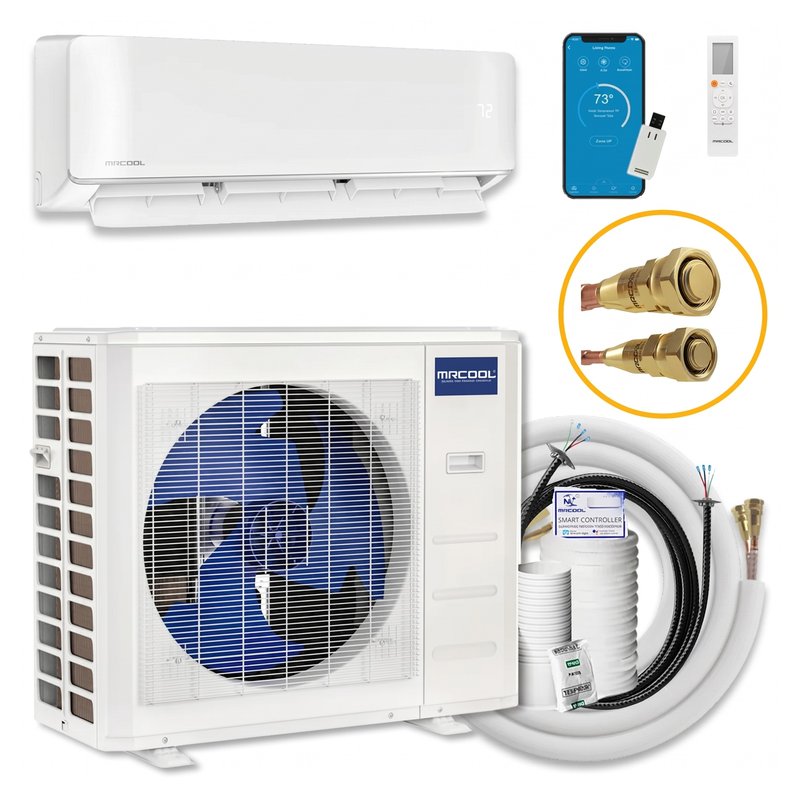
MRCOOL DIY 5th Gen 18K mini split

MRCOOL DIY 5th Gen 18K

Premium price range

18,000 BTU with a 25 ft pre-charged line and a −13°F brand rating, on 230V.

See specs ›
Best with a pro install#2
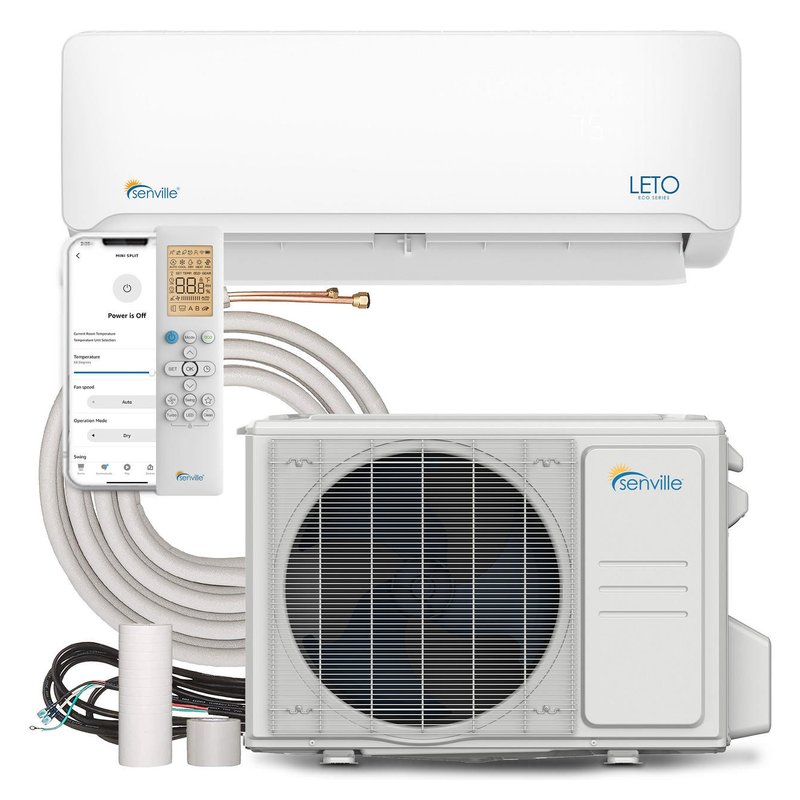
Senville LETO 18K mini split

Senville LETO 18K

Mid-range price range

Mid-range price and the same capacity, if winters stay above its 5°F rating.

See specs ›
Best for 115V garages#3
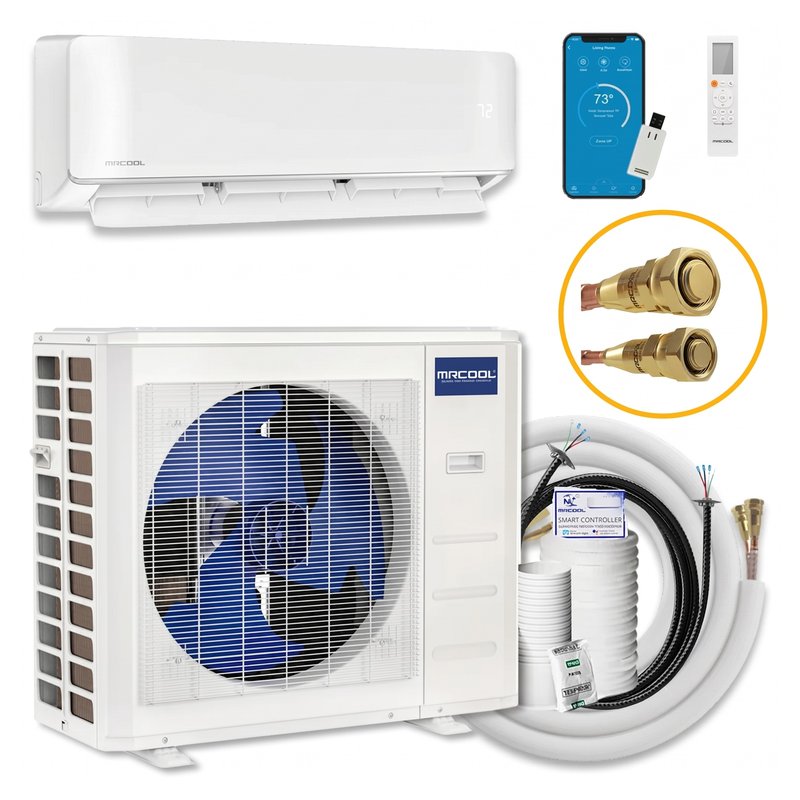
MRCOOL DIY 5th Gen 12K mini split

MRCOOL DIY 5th Gen 12K

Premium price range

The 115V option for a smaller, insulated space with a dedicated circuit.

See specs ›

In detail

Who each one suits

Specifications and ratings are each brand’s own; fit notes draw on ENERGY STAR, DOE and manufacturer documents. We have not tested or used these systems.

Best DIY for a two-car garage#1

MRCOOL DIY 5th Gen 18K

The same quick-connect approach at 18,000 BTU suits a two-car garage, a workshop or a large open room. MRCOOL lists coverage up to 800 sq ft under ideal conditions, which is exactly why an uninsulated garage needs a load check first.

Why it stands out

  • Brand-rated 22.5 SEER2 and heat operation to −13°F.
  • 25 ft pre-charged line set gives more placement room than the shorter kits.
  • 5-year parts and 7-year compressor warranty per MRCOOL; non-transferable.
Capacity18,000 BTU
SEER222.5
Power208/230V
Heat rated to−13°F
Install25 ft pre-charged quick-connect kit

Good fit if

  • An insulated garage, shop or large room with a 230V circuit available.
  • MRCOOL states no vacuum is required; read the EPA note below.

Skip it if

  • Your garage only has 115V: the 12K is the 115V model.
  • The space is uninsulated and you have not checked the heat load.

MRCOOL’s catalog lists the 18K as 208/230V only. Confirm the voltage on the product page before you buy, and match it to your circuit. EPA’s published Q&A says connecting pre-charged lines on an R-410A mini split requires Section 608 certification. Some sellers say otherwise for quick-connect kits. This system uses R-454B and we found no EPA statement on such kits, but EPA’s Section 608 page says the rules cover substitutes such as HFCs, so do not assume the R-410A answer leaves it out. Check with EPA and your local code office before you self-install.
Best with a pro install#2

Senville LETO 18K

A Mid-range way to condition one large room when you already have an installer. It is the value choice by size, and the trade-off is the 5°F heating rating.

Why it stands out

  • 18,000 BTU cooling and 18,800 BTU heating per Senville.
  • Brand-rated 19.2 SEER2 with up to 98.4 ft of line in the brand’s table.
  • 5-year parts and 5-year compressor warranty, subject to Senville’s install terms.
Capacity18,000 BTU
SEER219.2
Power208/230V
Heat rated to5°F
InstallLicensed pro required by the brand

Good fit if

  • A large room up to about 1,000 sq ft on ENERGY STAR’s chart, in a mild-winter climate.
  • An insulated garage with a 230V circuit and a contractor lined up.

Skip it if

  • Winters regularly go below 5°F.
  • You want to self-install: Senville says DIY installation voids the warranty.
Best for 115V garages#3

MRCOOL DIY 5th Gen 12K

This is the sensible first system to look at if you are buying online. The kit ships with a 25 ft pre-charged quick-connect line set, the brand rates heating down to −13°F, and MRCOOL states its DIY warranty does not depend on a licensed contractor. You can still hire one, and many buyers should.

Why it stands out

  • Brand-rated 23.5 SEER2 and heat operation to −13°F on a 115V circuit.
  • Longest included line set in the MRCOOL DIY family: 25 ft, pre-charged, with a brand-stated no-vacuum connection.
  • 5-year parts and 7-year compressor warranty per MRCOOL, with no registration required; labor is not covered.
Capacity12,000 BTU
SEER223.5
Power115V
Heat rated to−13°F
Install25 ft pre-charged quick-connect kit

Good fit if

  • One room up to about 550 sq ft (the brand’s figure).
  • You want a warranty that does not rest on a licensed install.
  • You can put in a dedicated 115V, 20A circuit.

Skip it if

  • Price matters most: a professionally installed LETO or Serena costs less to buy.
  • You have no dedicated circuit and no electrician lined up. It does not plug into a wall outlet.

EPA’s published Q&A says connecting pre-charged lines on an R-410A mini split requires Section 608 certification. Some sellers say otherwise for quick-connect kits. This system uses R-454B and we found no EPA statement on such kits, but EPA’s Section 608 page says the rules cover substitutes such as HFCs, so do not assume the R-410A answer leaves it out. Check with EPA and your local code office before you self-install.

Also worth a look

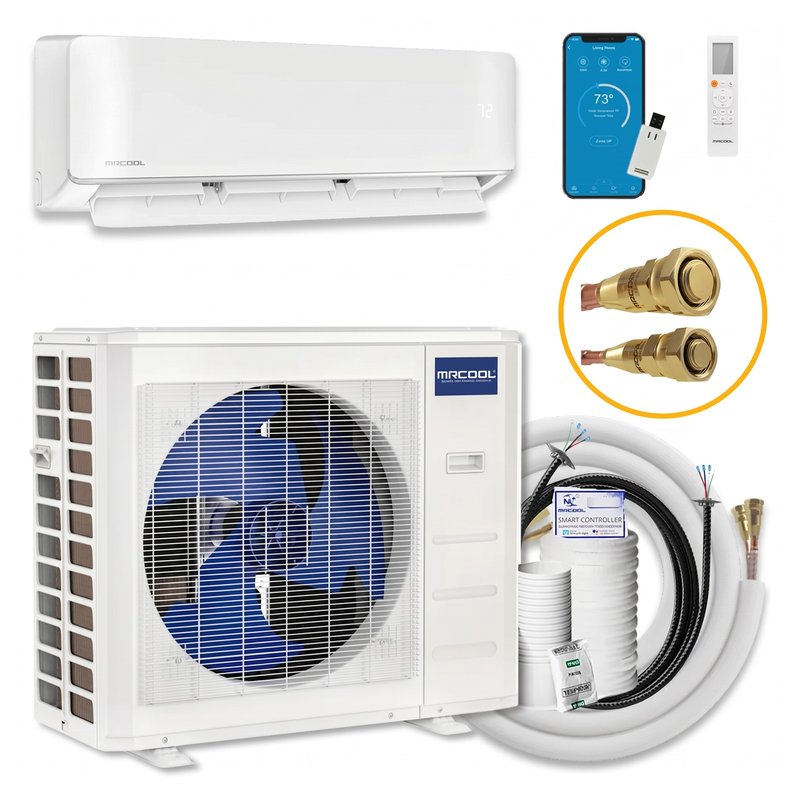
MRCOOL DIY 5th Gen 24K

A 24,000 BTU quick-connect system for open-plan spaces. MRCOOL lists coverage up to 1,050 sq ft, while ENERGY STAR’s room chart puts 24,000 BTU at up to 1,500 sq ft, so treat either figure as a starting point and ask for a load calculation.

Why it stands out

  • Brand-rated 22.7 SEER2 and heat operation to −13°F.
  • 25 ft pre-charged line set with a brand-stated no-vacuum connection.
  • 5-year parts and 7-year compressor warranty per MRCOOL.
Capacity24,000 BTU
SEER222.7
Power208/230V
Heat rated to−13°F
Install25 ft pre-charged quick-connect kit

Good fit if

  • A large open room with a 208/230V circuit.
  • You want the DIY warranty terms at a larger size.

Skip it if

  • You have no 230V circuit.
  • One person is doing the lift: MRCOOL’s catalog lists the outdoor unit at 122.8 lb.
  • It is a bedroom: the brand rates top fan speed at 54 dB indoors.

EPA’s published Q&A says connecting pre-charged lines on an R-410A mini split requires Section 608 certification. Some sellers say otherwise for quick-connect kits. This system uses R-454B and we found no EPA statement on such kits, but EPA’s Section 608 page says the rules cover substitutes such as HFCs, so do not assume the R-410A answer leaves it out. Check with EPA and your local code office before you self-install.

Is the garage insulated yet?

Insulate and seal first: it can change the size you need more than any feature on the spec sheet.

See ratings & reviews ›

Tips

Three things that make the difference

01

Insulate before you size

AC Direct says to insulate first and calls the door the largest energy opening. South Mini Splits says uninsulated walls can effectively double the capacity needed.

02

Mind the dust and the filters

Clogged filters can cause poor heating or cooling, water leaks and system damage, per Trane. A workshop usually means more dust, so check the filters more often than a bedroom needs.

03

Plan the outdoor spot and drain

DOE lists a place to drain condensate outdoors as a requirement, and ENERGY STAR says to keep the outdoor unit away from doors because it releases water when defrosting. In snow, raise it per the manual.

Honest note

A garage is a hard space to size, and our evidence is thinner here: the sizing guidance on this page comes from sellers, not DOE or a manufacturer. A load calculation is worth paying for if the space is uninsulated or you plan to run it all winter.

FAQ

Questions people ask

What size mini split for a two-car garage?

South Mini Splits gives a minimum of 18,000 BTU for a 400–600 sq ft two-car garage, because uninsulated walls raise the load. On ENERGY STAR’s room chart, which assumes a normal room, 500 sq ft would be 12,000 BTU. Insulation is what separates those two answers.

Is a mini split good for a garage?

It can be, if the space is reasonably insulated and has power nearby. It heats and cools without ducts, and DOE says it needs only about a three-inch hole for the conduit. An uninsulated garage with a leaky door can overwhelm a small system, per AC Direct.

Can I use a 110-volt mini split in a garage?

Yes, for smaller insulated spaces, but it needs its own dedicated circuit. The MRCOOL DIY 12K lists a 20A max fuse on 115V. Pioneer says 115V models are limited to 9,000 and 12,000 BTU in its range, so a larger two-car garage usually points to 230V.

Do I need to insulate my garage before installing a mini split?

Sellers strongly advise it. AC Direct says to insulate first and that an uninsulated metal garage can raise BTU needs by 30–50%; South Mini Splits says it can effectively double them. We found no DOE guidance specific to garages, but insulation is what the sizing depends on.

Where should a mini split go in a garage?

Plan around the line and drain, and keep the air path clear. We found no garage-specific guidance from DOE or a manufacturer, so use your model’s manual for clearances. Keep the outdoor unit away from doors and windows, as ENERGY STAR advises, and allow unobstructed airflow.

Can a garage mini split run all winter?

Check the rating against your climate. MRCOOL rates the DIY 18K for heat operation to −13°F, and Senville rates the LETO 18K to 5°F. Fujitsu’s factory base pan heater activates below 36°F, and not every model includes one, so confirm this for your climate.

Size the garage you actually have

Want the full picture? See all our best mini split ac and heat, compared by room and climate, and the FAQ on sizing, install rules and cost.