What size mini split system do I need?
Use ENERGY STAR’s room chart as a start: 9,000 BTU at 350–400 sq ft, 12,000 at 450–550, 18,000 at 700–1,000 and 24,000 at 1,400–1,500. Then have a contractor run a Manual J calculation, which ENERGY STAR advises. Insulation, windows and ceiling height can move the answer.
What size mini split for a 1,000 sq ft house?
About 18,000 BTU sits at the top of ENERGY STAR’s 700–1,000 sq ft band, though AC Direct sizes MRCOOL at 24,000 BTU for about 1,000 sq ft. Efficiency Vermont slides say most homes need 2–3 zones, so compare one large unit with several smaller ones.
Can one mini split cool and heat a whole house?
It depends on the layout. Efficiency Maine sizes mini split heat pumps at about 300 to 3,000 sq ft across single and multi systems, but one head only conditions the space its air reaches. Most homes need 2–3 zones, according to Efficiency Vermont slides.
Is a bigger BTU system better?
No. DOE says oversized systems cause short cycling, waste energy and reduce temperature and humidity control, and cost more to buy and run. A DOE-sponsored field study found ductless units running near minimum capacity, which suggests oversizing. Inverter systems modulate, but they still have a floor.
What is the difference between a mini split system and central air?
A mini split moves refrigerant to indoor heads with no ducts; central air moves air through ducts. DOE says ducts can waste over 30% of space-conditioning energy. Bob Vila lists an average central AC installation at $5,860 against about $3,000 for a mini split, but the two do not cover the same area.
Are mini split systems ENERGY STAR certified?
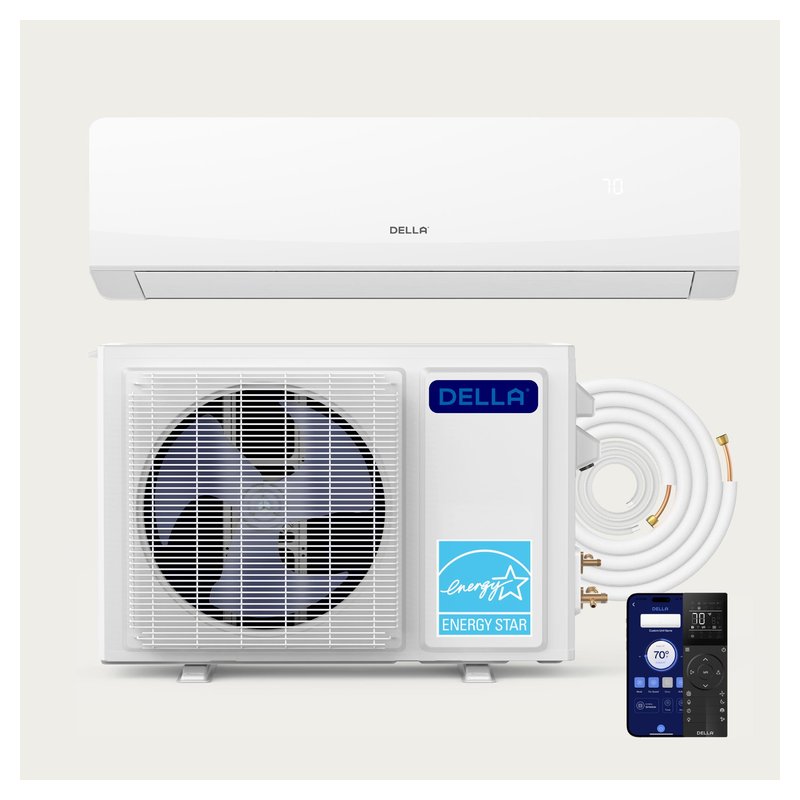
Some are. ENERGY STAR requires at least 15.2 SEER2, 11.0 EER2 and 7.8 HSPF2 for split heat pumps, and its cold climate tier adds 8.5 HSPF2 for non-ducted systems. Check the certification for your exact indoor and outdoor pairing rather than relying on the series name.